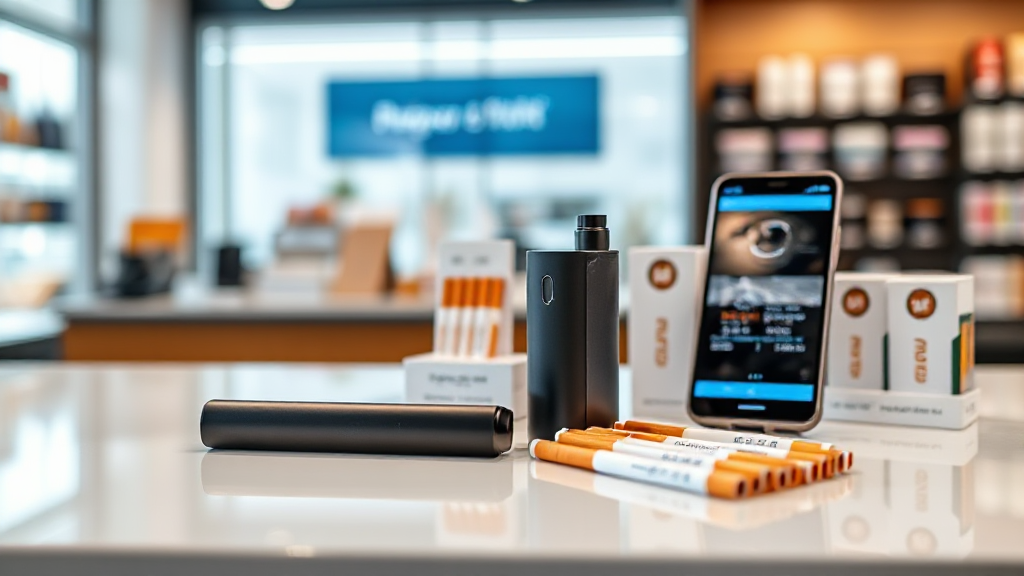
Buying Terea Online vs Buying In Store: Which Route Is Actually Safer?
Most guides about buying terea online skip the one thing that actually matters: verifying the seller before you type a single card number. I’ve spent years on the support desk for a European heat-not-burn retailer, and almost every complaint I’ve handled started the same way — someone found a listing, trusted the photos, and only asked questions after the parcel failed to arrive or the sticks tasted wrong. So instead of another generic overview, here’s what I actually saw happen, in the order it happened, plus the checks I now walk every customer through.
What the tickets taught me about trust signals
The first pattern was speed. Listings that promised same-day dispatch from an unnamed warehouse, with no physical address and no company registration number, were almost always the ones that generated refund disputes. When I pulled the details, the site had been live for a few weeks, the contact page pointed to a free email provider, and the payment options were limited to bank transfers and crypto. That combination is the single strongest warning sign I’ve encountered, because it removes the buyer’s ability to reverse a charge.
The second pattern was language. Genuine European retailers of heated tobacco products usually describe their stock in specific terms — device model, stick variant, flavour family, pack count, and the country the product was sourced for. Shops that only wrote “Terea sticks, cheap, fast shipping” without naming variants were often reselling mixed or expired stock. One customer sent me photos of a box where the batch code didn’t match the format used by any legitimate manufacturer I could identify. That’s not a shipping problem; that’s a supply chain problem, and it can’t be fixed after delivery.
The third pattern took longer to see. Buyers who ordered from marketplaces with no age verification at checkout often had their parcels held at customs, because European rules on heated tobacco imports vary by country and carriers ask for documentation. The shops that handled this well had a compliance page, an age gate, and a clear statement about which countries they ship to. The ones that didn’t left the customer to argue with a customs office alone. If you’re comparing options, the practical takeaway is that a shop’s legal and shipping pages tell you more about reliability than any discount banner.
Payment method came up in nearly every case. Card payments processed through a recognised provider give you a dispute route. Bank transfer gives you almost nothing. Crypto gives you nothing at all. I’ve seen customers recover money through a card chargeback after a non-delivery, and I’ve never once seen a successful recovery after a direct transfer to an individual’s account. That asymmetry should shape where you buy.
Stock freshness is the quieter issue. Heated tobacco sticks have a shelf life, and flavour degrades with heat and time. A seller moving high volume rotates stock naturally. A seller with irregular supply may hold inventory for months in a warm room. Customers who complained about dry or harsh sticks almost always traced it back to a low-volume reseller. Asking how often a shop restocks is a reasonable question, and a serious retailer will answer it.
Delivery expectations also matter more than people assume. A realistic European delivery window is a few working days for domestic dispatch and longer for cross-border shipments, depending on carrier and customs. Listings promising two-day delivery across the entire continent at a very low price are usually either misrepresenting the timeline or shipping from outside the EU, which reintroduces the customs problem. When a customer’s tracking number never updated, the cause was almost always that the parcel hadn’t actually been handed to a carrier — the label had been created and nothing more.
What surprised me most was how often the fix was simple. Buyers who checked three things before ordering — a verifiable business identity, a reversible payment method, and a shipping policy that named the countries served — rarely came back with problems. The ones who skipped those checks came back frequently. Same products, same prices in many cases, completely different outcomes.
What I’d verify before ordering, and in what order
Start with identity. Look for a registered company name, a physical address, and a contact method that isn’t only a web form. If the shop is part of a broader European e-commerce operation with a consistent brand presence, that’s a good sign, because it means there’s something to lose if they mishandle orders. Cross-check the domain’s age and whether the product descriptions are specific enough to have been written by someone who handles the stock.
Then check the payment page before you commit. A recognised card processor, a clear refund policy, and a stated returns window are the three elements I’d want to see. If the checkout pushes you toward an irreversible method as the default, treat that as a decision made for the seller’s convenience, not yours. Also confirm that age verification happens at checkout rather than being skipped entirely, because that’s a marker of a shop operating within the rules.
Next, read the shipping terms for your specific country. Heated tobacco rules differ across Europe, and a retailer that publishes country-level guidance is telling you they’ve done the work. Look for realistic delivery estimates, a named carrier where possible, and a tracking number that updates within a day or two of dispatch. If tracking stalls for more than a few working days, contact support early rather than waiting; the earlier a problem is logged, the easier it is to resolve.
Finally, inspect what arrives. Check the batch code, the packaging seal, and the flavour consistency against what you normally use. If something is off, photograph it before opening further and contact the seller immediately. Legitimate retailers replace faulty or misdescribed stock; that’s part of the cost of doing business for them. A seller who argues about a clearly defective box is telling you what the next order will be like.
The lesson from all those tickets isn’t that online buying is risky. It’s that the risk sits almost entirely in the seller you choose, not in the channel itself. A properly run European shop with transparent terms, reversible payment, and honest delivery estimates is a safer route than an unfamiliar counter with no receipt. Do the three checks, keep your order confirmation, and the process is unremarkable — which is exactly what it should be.