A Normal Day With tk999: One Bangladeshi User’s Honest Timeline
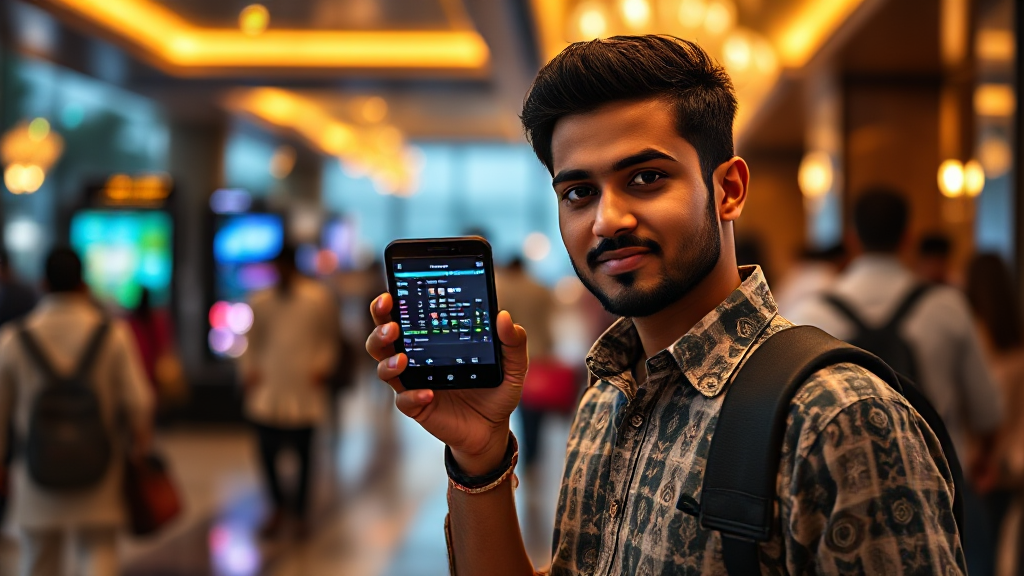
Rifat wakes up at 6:40 on a Tuesday in Dhaka, and the first thing his hand finds is not his slippers but his phone. This is not a dramatic story. He is a 29-year-old accounts assistant at a garment export office in Uttara, he takes the same bus route he has taken for four years, and he checks cricket scores before he checks his own messages. Somewhere in that morning scroll, tk999 appears the way it usually does — not as a big decision, but as a small tab he opens, glances at, and closes again.
I followed Rifat through one ordinary weekday, partly out of curiosity and partly because most writing about betting platforms describes features while saying almost nothing about timing. The interesting question is not what a platform can do. It is where it actually fits into a working day, and where it quietly does not.
Morning: The Commute, the Queue, and the Ten-Minute Rule
By 7:20 Rifat is standing at the bus stop near Sector 7, one earbud in, phone in the other hand. The bus is late, which is normal. This is the first slot of the day where his attention is genuinely free — no manager, no spreadsheets, no one asking him to reconcile a delivery challan. He opens the tk999 app, which he downloaded months ago, and spends about ten minutes on it.
What he does in those ten minutes is unremarkable. He checks a couple of cricket fixtures, looks at a football match scheduled for later in the week, and reads a headline about a squad injury. He does not place anything. He tells me this is the most common pattern for him: mornings are for information, not action. “If I try to do anything fast in the morning, I do it badly,” he says. “So I stopped.”
That self-imposed rule matters more than any feature on the platform. The app loads quickly on his mid-range phone, the interface is in a language he reads comfortably, and the registration he completed months earlier took him a few minutes with a photo of his ID. None of that is the point. The point is that he has decided the morning is only for looking, and that decision is what keeps the rest of his day intact.
On the bus, he puts the phone away entirely. The ride takes fifty minutes on a good day and ninety on a bad one, and he uses it to sleep or to answer work messages. The app stays closed. When I ask whether he ever feels tempted during the ride, he laughs. “On a moving bus? No. I would rather arrive alive.”
Midday: Work, Lunch, and the Discipline of Not Checking
Rifat’s office is loud in the way that export offices are loud — phones ringing, printers jamming, someone always walking between desks with a folder. His lunch break is 1:00 to 1:45, and he eats with three colleagues at a small canteen downstairs. The conversation is about salaries, cricket, and a colleague’s sister’s wedding. Nobody talks about betting, and Rifat does not bring it up.
He does check his phone during lunch, but not for tk999. He checks it for the same reasons everyone else does: family group chats, a delivery notification, a message from his landlord. The betting platform sits untouched for the entire middle of the day. This is deliberate. He tried, in his first few months of using the app, to check it during work hours, and he found that it fragmented his attention badly. “I would look at a match, then look at my sheet, then look at the match again, and by 5 p.m. I had done nothing properly,” he says. So he drew a line: work hours are work hours.
It is worth saying plainly that this is not a story about a platform changing someone’s life. It is a story about a platform occupying a small, bounded corner of it. Rifat’s income is modest and predictable. He has a fixed monthly amount he is willing to spend on entertainment — the same pot that covers his streaming subscription and the occasional Friday football match with friends — and the app draws from that pot or not at all. When the pot is empty, the app stays closed until the next month. He showed me the note he keeps in his phone’s reminders: a single line with a number on it. That is his entire system.
Evening: The Real Window, and Why It Is Short
Rifat gets home around 7:15. He showers, eats dinner with his family, and then — this is the part most articles skip — he has about ninety minutes of genuinely free time before he gets tired. Between roughly 8:30 and 10:00, he does whatever he wants. Some nights that is a drama series. Some nights it is a phone call with a friend in Chattogram. Some nights it is the app.
On the Tuesday I followed him, it was the app. A cricket match was in its second innings, and he had been thinking about it since the bus stop that morning. He opened the app, checked the live state of the game, and made one decision. One. He did not chase, he did not add a second selection to compensate for the first, and when the match ended he closed the app and watched twenty minutes of a comedy before sleeping.
He lost that night. He mentions it the way someone mentions a bus fare — as a small, expected cost. “If I lose, I lose the amount I already decided I could lose,” he says. “If I win, it goes back into the same pot. Nothing changes either way.” That sentence is the most useful thing anyone said to me all day, because it describes a boundary rather than an outcome.
What surprised me was how little the platform itself dominated the evening. The match was the event. The app was the window. If the app had been slow or confusing, he would simply have watched the match on television instead — and this is where the practical details of a platform actually matter. A clean registration process, a downloadable app that works on an ordinary Android phone, and a layout that does not require guesswork are not selling points so much as friction removers. When friction is low, the platform becomes easy to use in a fifteen-minute window. When friction is high, the window closes and the user does something else. That is the whole competition.
Night: What Stays, What Goes, and What the Day Actually Proves
By 10:30 Rifat’s phone is on the bedside table, face down, charging. He does not check anything after that. He told me he used to keep the phone next to his pillow, and that the change to the bedside table — a small physical distance — did more for his sleep than any app setting ever did.
Looking back at the day, the honest summary is this: out of roughly sixteen waking hours, tk999 occupied about twenty-five minutes. Ten in the morning, fifteen at night. The rest of the day belonged to a bus, a canteen, a spreadsheet, a family dinner, and a comedy series. If you were expecting a story about a platform swallowing someone’s life, this is not it. If you were expecting a story where the platform is irrelevant, that is not quite true either — because those twenty-five minutes were genuinely enjoyable, and he chose them freely.
The useful lessons are not about the product. They are about structure. A fixed time window works better than an open-ended one. A fixed monthly amount works better than a vague sense of what is affordable. A physical separation from the phone at night works better than willpower. And a platform that loads quickly, registers simply, and presents information clearly makes all of those boundaries easier to keep, because it does not demand more time than the user intended to give.
Rifat’s Tuesday ended the way most Tuesdays end. He lost a small amount, slept normally, and woke up at 6:40 the next morning to check cricket scores before his messages. The app was there. It was also, for most of the day, not. That balance is not a feature anyone can sell you — but it is the only version of this that works over the long run, and it is worth building before you build anything else.